Once you’ve familiarized yourself with the fabric decoration techniques below, you can begin to identify the methods that were likely used in a given illustration or extant. This list is far from exhaustive, but covers the most common types. For more details on each technique, check out the specific articles on this website, or the Kyо̄to Dyeing and Weaving Culture Association article.
Resist-dyeing thread before weaving: kasuri (絣, ‘ikat’), including karaori (唐織, ‘Chinese weave’) and noshime (熨斗目, ‘appearance like strips of abalone’)

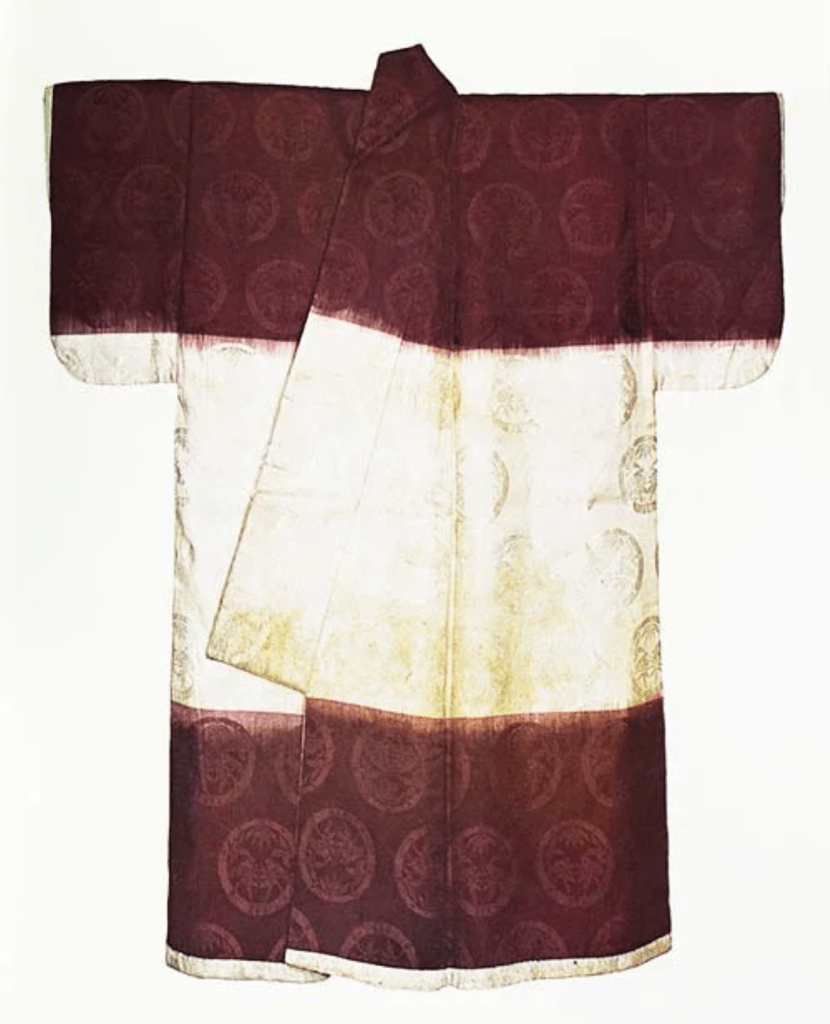
Compression resist: shibori (絞り, ‘squeezed’)

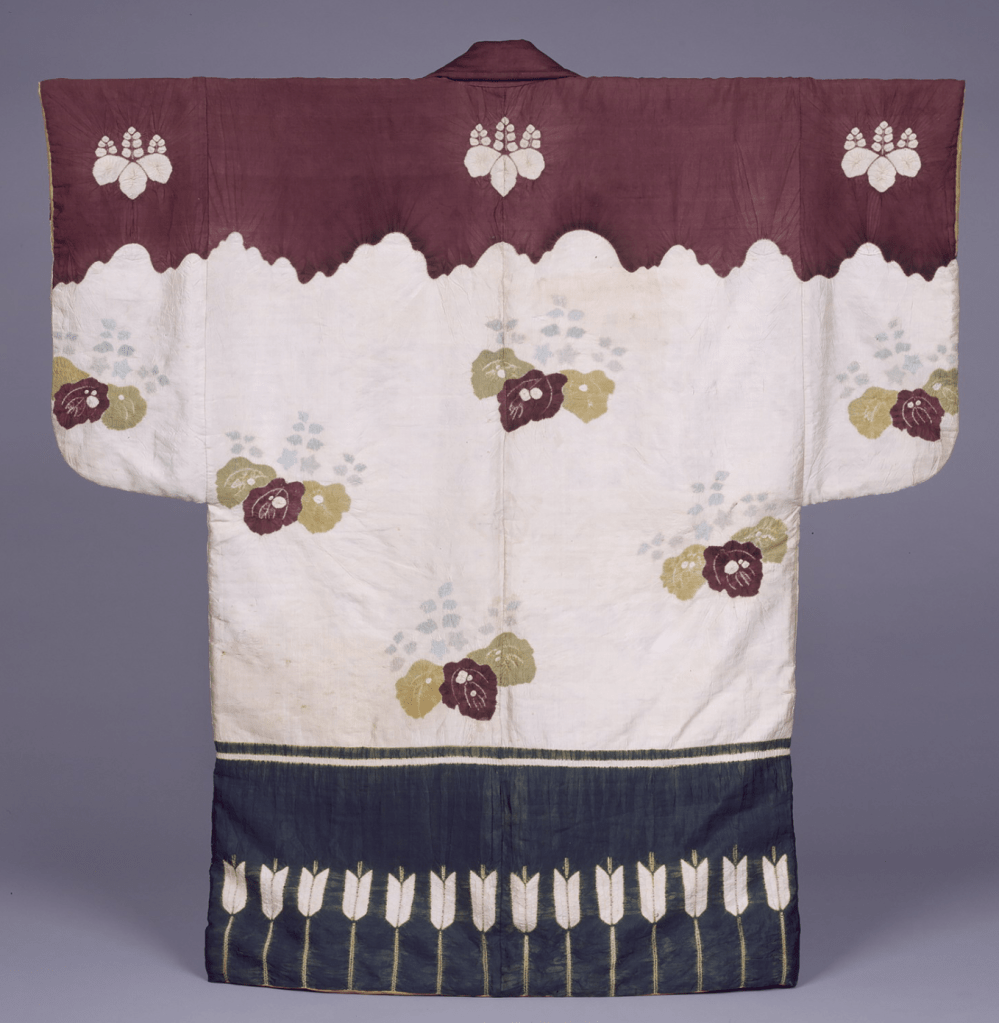
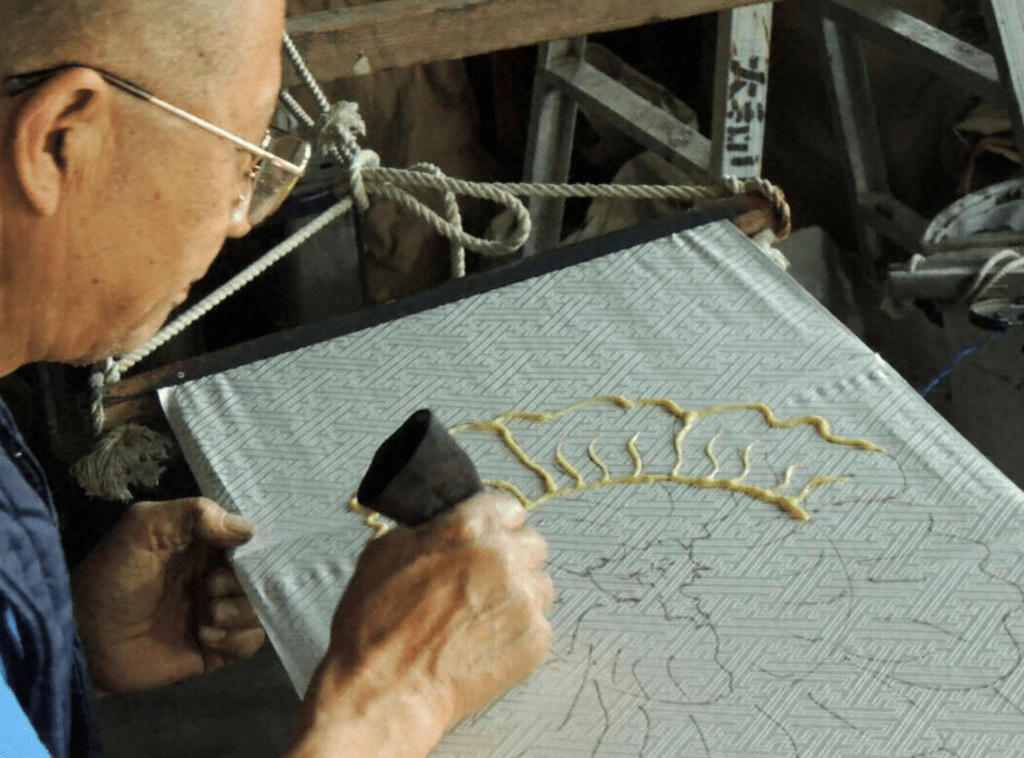
Rice paste resist: tsutsugaki (筒描, ‘tube-drawn’) and katazome (型染め, ‘stencil-dyeing’)
A mixture of rice paste is applied to the fabric before dyeing, so that the dye is prevented from reaching the fabric in those areas.
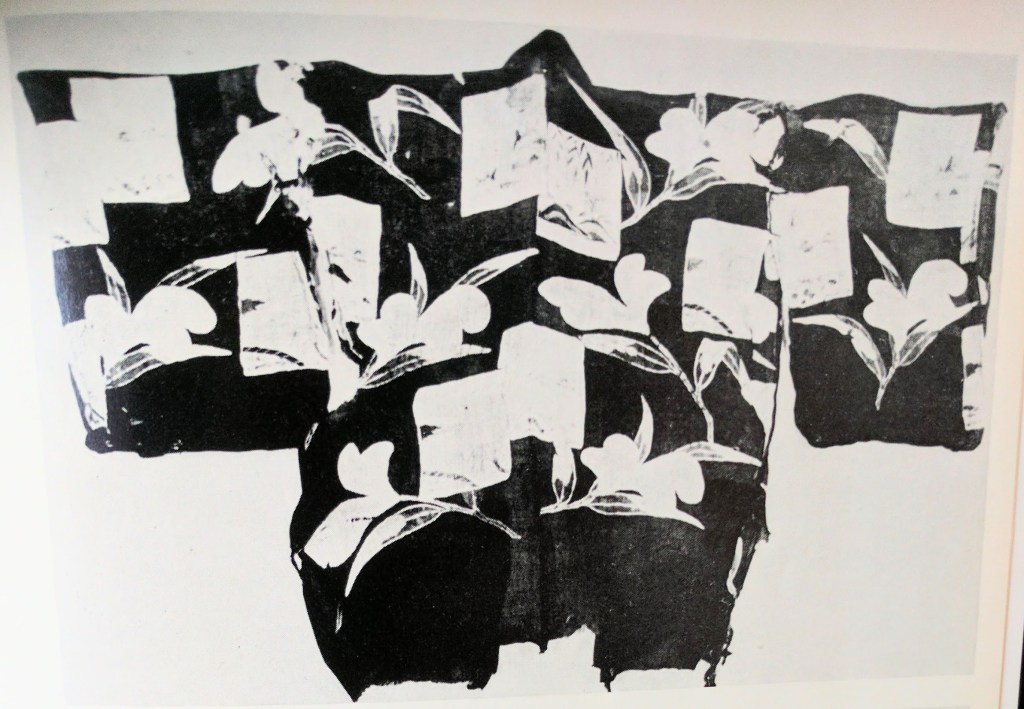
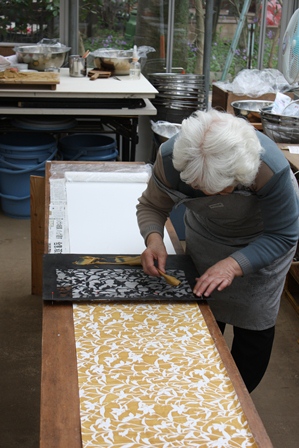
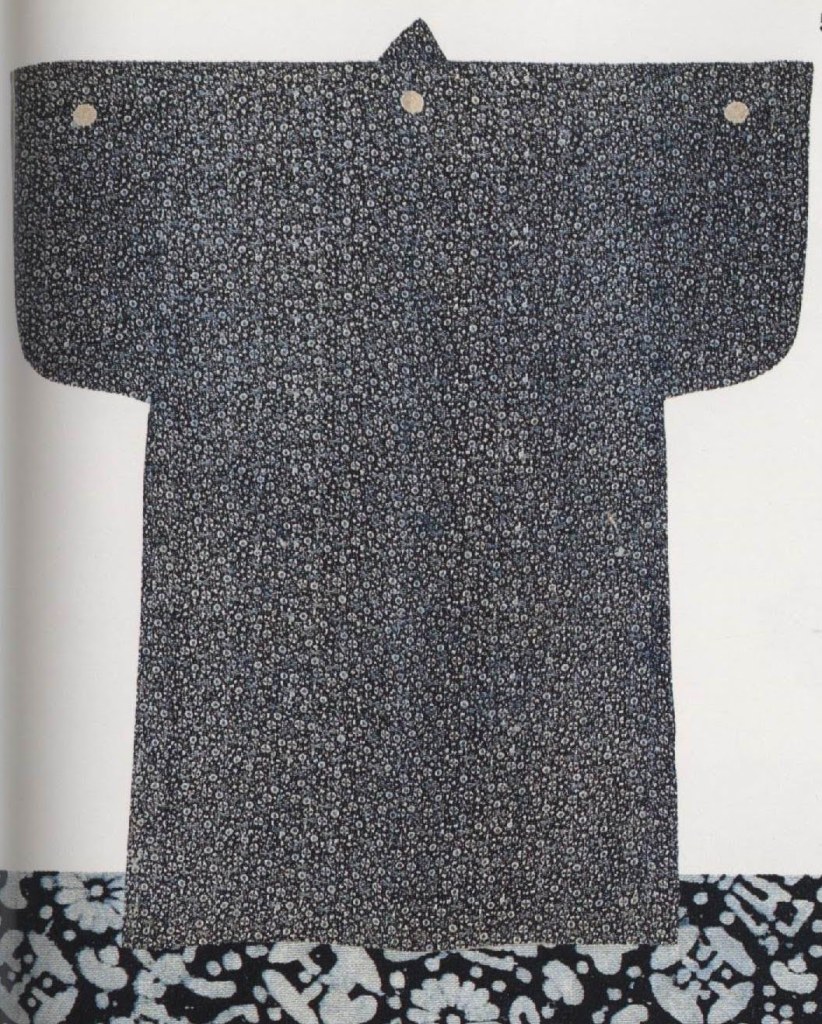
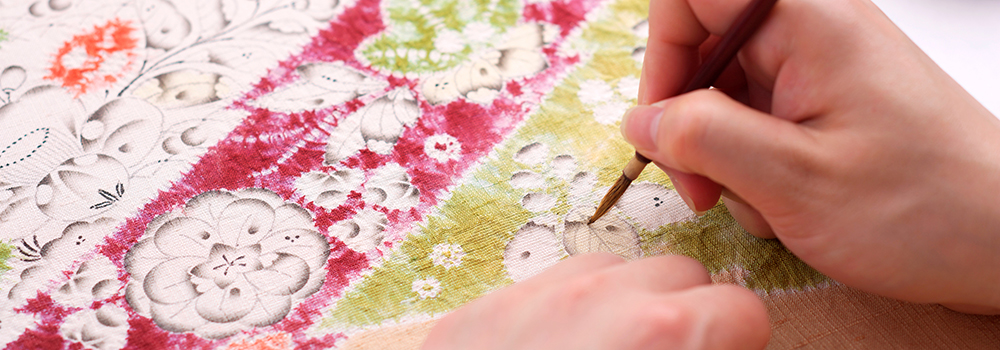
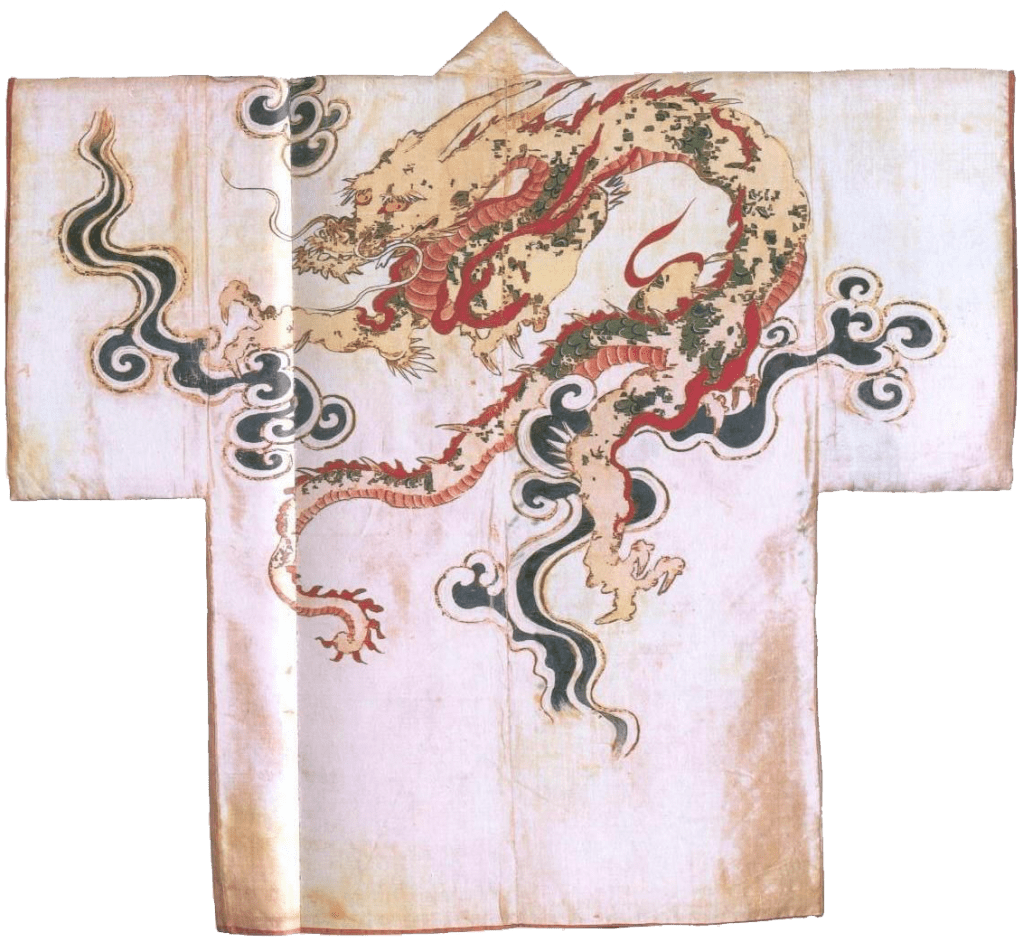
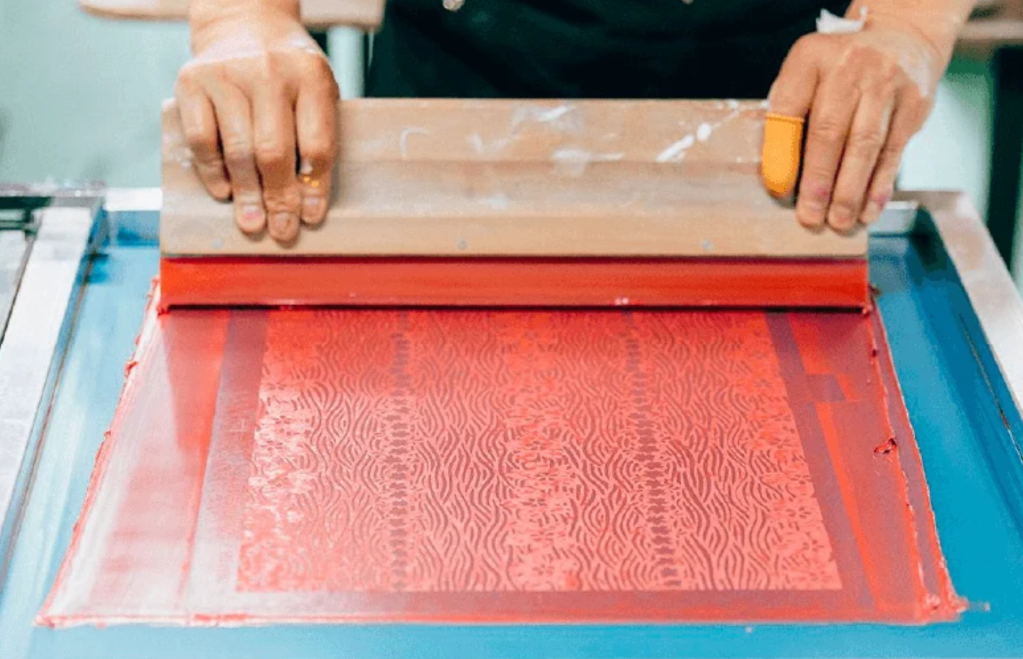
Applying ink/dye/pigment to fabric: kaki-e (描き絵, ‘drawing pictures’) and kata-surizome (型摺り染め, ‘stencil print-dyeing’)
Article: “Ink and Pigment in Fabric Decoration“
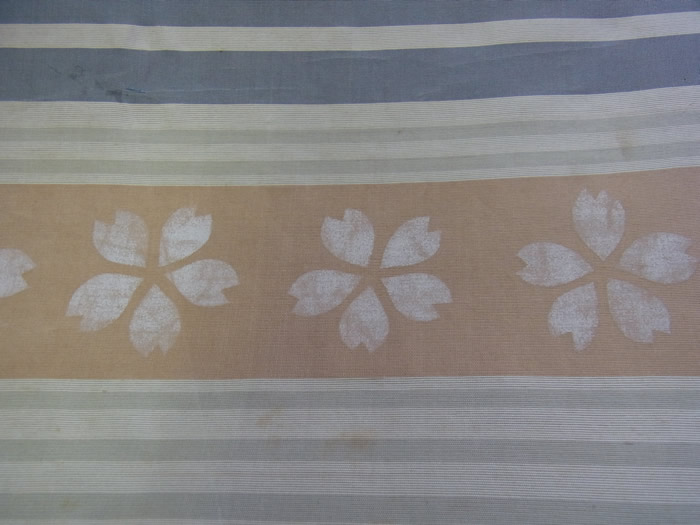
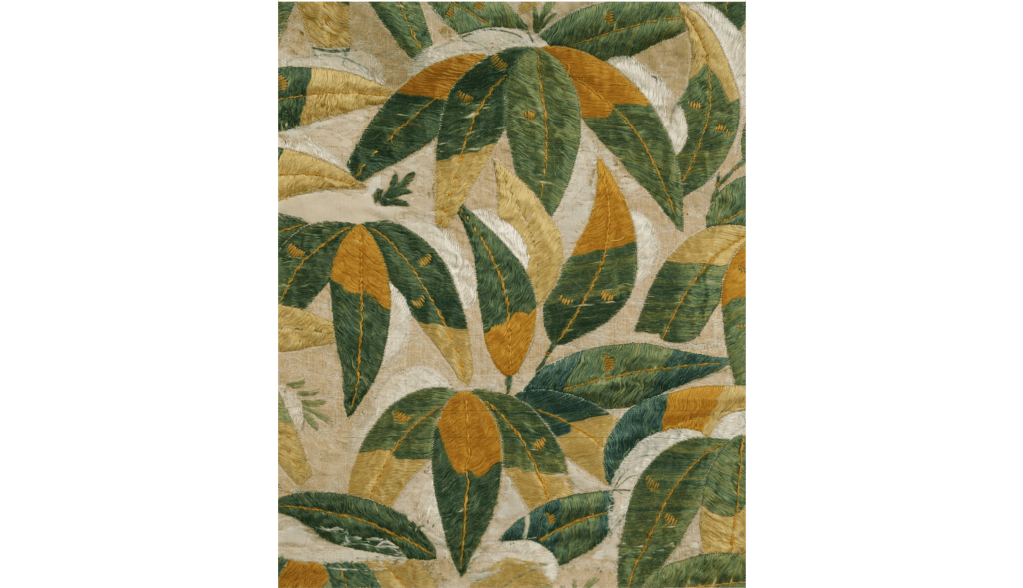
Embroidery: multiple terms including nuidori (縫い取り, ‘stitches taken’) and shishū (刺繍, ‘prick-sewn’)
See Cultural Heritage Online for images.
Brocaded weaves can look very much like embroidery, and may incorporate kasuri resist dyeing.

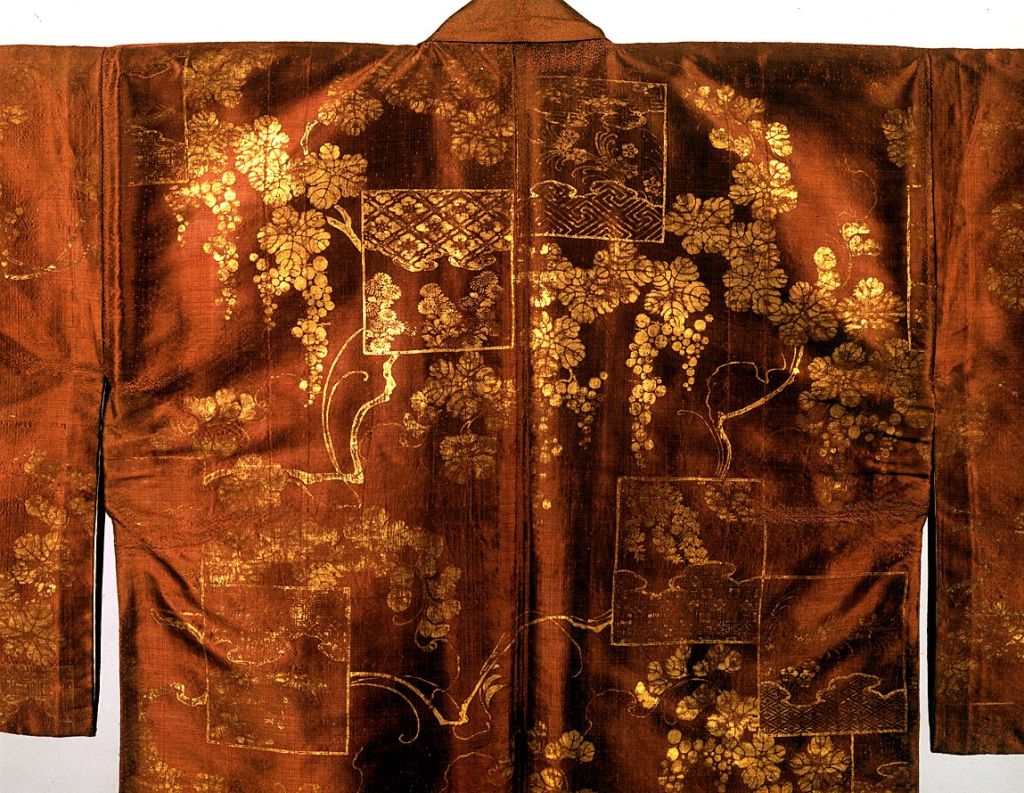
Metallic foil application: surihaku (摺箔, ‘printed foil’)
See Cultural Heritage Online for images.

Approximate order of formality/wealth:
- Embroidery
- Gold leaf
- Hand painting
- Kasuri
- Stenciling
Shibori in a way stands outside this hierarchy of formality, because it can be suitable for a beggar or the shōgun depending on the skill of the artists tying and dyeing the fabric, and how labor-intensive the design is.
References:
- Cardon, Dominique. Natural Dyes: Sources, Tradition, Technology and Science. London: Archetype, 2007.
- Ito, Toshiko. Tsujigahana : The Flower of Japanese Textile Art. Kodansha America, Incorporated, 1985.
- Kaneko, Kenji. Katazome, Komon, Chuugata. Kyoto: Fujioka Mamoru, 1994.
- Kyoto Dyeing and Weaving Association. https://senshokubunka-kyoto.jp/gijyutu/ Accessed 2/13/24.
- Nakano, Eiko and Barbara Stephan. Japanese stencil dyeing: paste-resist techniques. New York: Weatherhill 1982.
- Stinchecum, AM. Kosode: 16th to 19th Century Textiles From the Nomura Collection. Japan Society and Kodansha International, 1984.
 旦暮庁 TANBO-CHŌ
Leave a comment