A common question asked by the new Japanese persona is what types of arts and sciences they can practice. Some, like making clothing, are very commonly studied, while other medieval skills such as puppetry, leather-smoking, and kite-making are frequently overlooked. Here is an overview to spark ideas of the types of research and projects available to you (though naturally, these loose categories overlap a great deal).
Cultural:
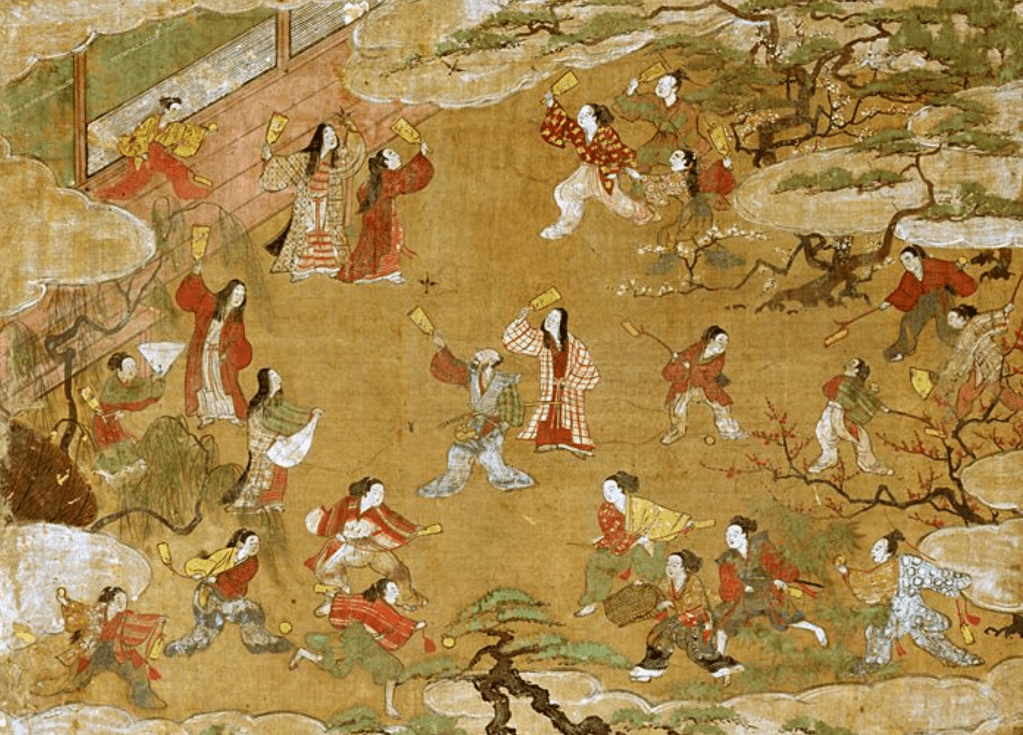
- Sports (kemari (foot ball), sumo, hanetsuki (shuttlecock), gitchō (stickball), cock-fighting, dog-fighting, falconry, kites)
- Games (toys, go, shogi, ban-sugoroku, e-sugoroku, uta karuta, kai awase, cha awase, otedama)
- Religious (exorcism, divination, sutra reading)
- Government
- Women’s studies
- Studies of ethnic, social and geographic subgroups
- Religion/philosophy
- Language
Practical:
- Medicine (herbal, acupuncture, moxa, massage)
- Apothecary work (incense/cosmetics/pigments/glues/poisons/ink stones
- Astronomy/divination/timekeeping/calendar-keeping/mathematics
- Geography/mapmaking/military tactics
- Hunting/tanning/leatherworking (tabi, gloves, armor, smoked patterning and dyeing)
- Fishing/cormorant fishing/diving/making salt
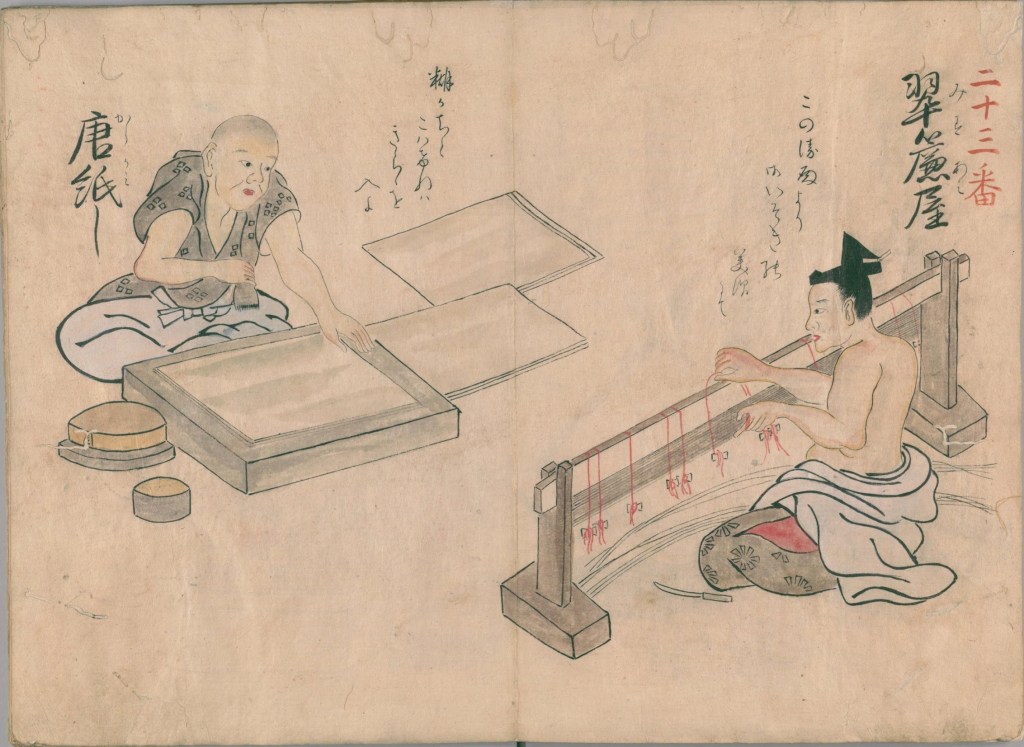
- Paper-making/papercrafts (hats, clothing, tissues, hair ties, stencils)
- Cooking/fermentation/food preservation/brewing
- Raising silkworms
- Making thread from silkworm cocoons, banana fiber, hemp, ramie, mulberry bark, wisteria, etc.
- Hat-making (lacquered fabric or paper, sedge, etc)
- Bamboo/straw/sedge weaving (tatami, sandals, fish traps, bird cages, oi (backpack frames), hako (baskets), enza (straw seat cushions), mino (straw coats))
- Cord-making/decorative knots and tassels/pom-poms
Artistic:
- Scroll-mounting
- Tea
- Flower arranging (ikenobo (altar flowers), rikka (for tea ceremony), nageire (thrown in a vase), tatebana (standing flowers))
- Music/poetry
- Dance
- Theater/juggling/puppetry/other types of entertainment
- Religious storytelling/dance
- Garden design
- Sculpture (stone, wood, metal, ceramic)
Practical and artistic:
- Stoneworking (lanterns, water basins, grindstones)
- Pottery (cups, bowls, vases, furo (braziers), nabe (pots), tiles
- Woodworking (geta, saddles, boxes, bowls, fans, garment stands, carts, wheels, houses)
- Metalworking (kettles, bells, swords, armor, gold leaf, mirrors, scissors, fish hooks, needles, nails, coins, lanterns)
- Lacquerware/makie (saddles, boxes, bowls, hats, shoes)
- Bamboo working (bows, vases, staffs, tea scoops, water vessels, ladles, brushes, umbrellas)
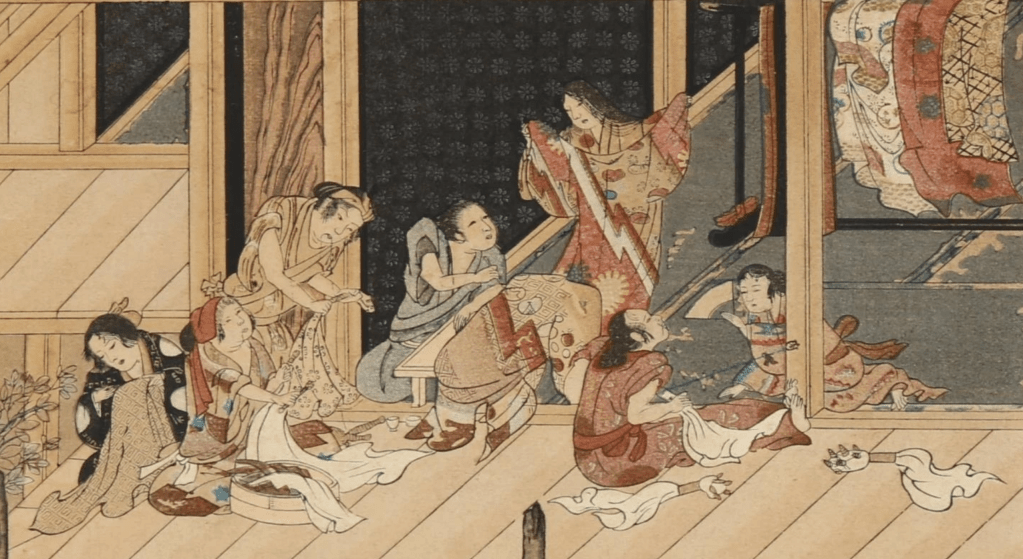
- Weaving/garb-making
- Fabric dyeing/embroidery/gold leafing/painting/resist dyeing
Martial skills:
- Archery (kyujutsu, 弓術)
- Horsemanship (bajutsu, 馬術)
- Swimming (sueiijutsu, 水泳術)
- Swordsmanship (kenjutsu, 剣術)
- Sword drawing (iaijutsu, 居合術)
- Knife skills (tantojutsu, 短刀術)
- Polearm skills (naginatajutsu, 薙刀術)
- Staff skills (bōjutsu, 棒術)
- Spear skills (sōjutsu, 槍術)
- Unarmed combat (yawara, 柔ら — precursor to jūjutsu, 柔術)
- Firearm skills (teppō, 鉄砲)
- Spying (ninjutsu, 忍術)
- Thrown weapon skills (shurikenjutsu, 手裏剣術)
- Needle spitting (fukumibarijutsu)
- Chain and sickle skills (kusarigamajutsu, 鎖鎌術)
- Roping skills (torite, 捕手)
- Barbed staff skills (mojirijutsu)
- Truncheon skills (jittejutsu, 十手術)
- War fan skills (tessenjutsu, 鉄扇術)
- Ballista skills (ōyumijutsu, 大弓術)
- Shield walls (kaidate)
- Brush barricades (sakamogi)
- Arrow-catching cloak (horo, 幌)
- Deflection of flying arrows (yadomejutsu, 矢止め術)

For more information about these martial skills, read Handbook to Life in Medieval and Early Modern Japan, by William Deal.
 旦暮庁 TANBO-CHŌ
Leave a comment