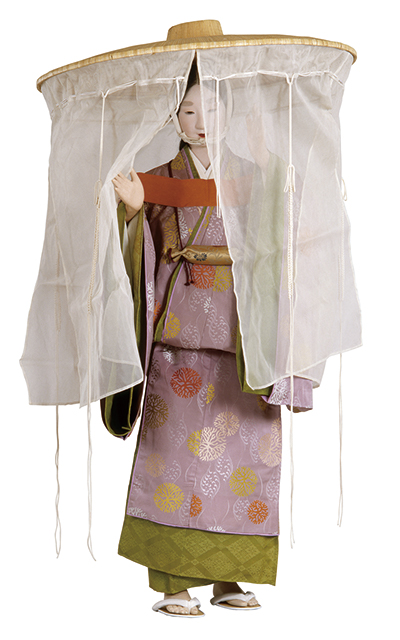
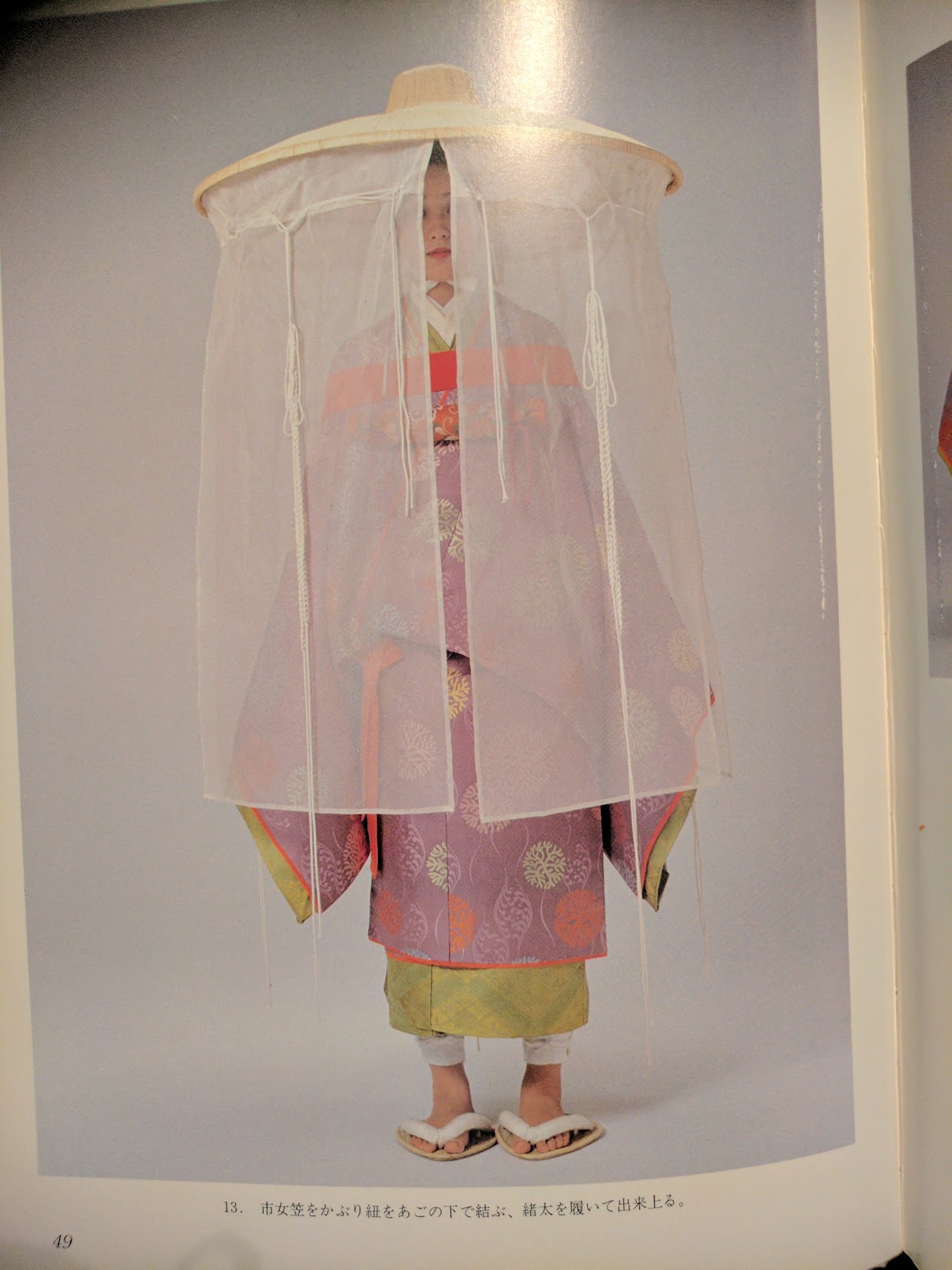
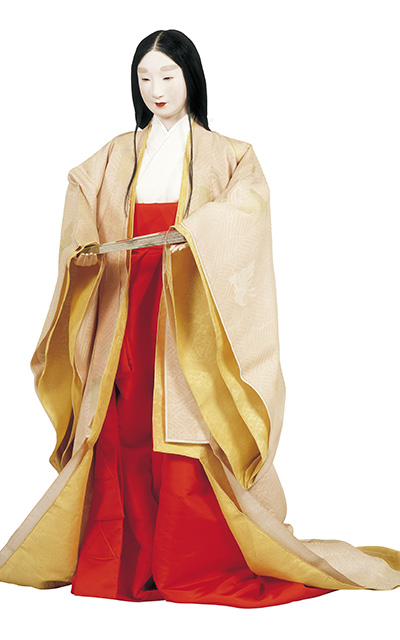
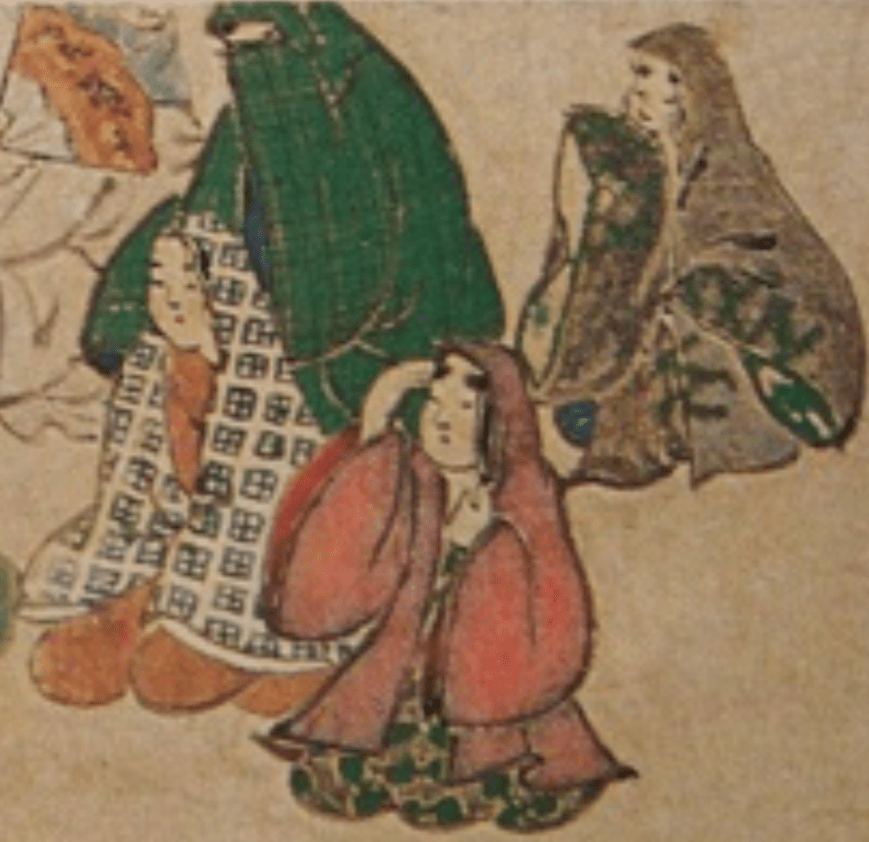
Wealthy women of the kuge (noble) and buke (warrior) social classes wore variants of this ensemble presented by the Kyōto Costume Museum during the Heian and Kamakura periods, and a less elaborate version was used by commoners. The traveling variant (belted to shorten the hem) shown here is referred to as a tsubo-shōzoku (壺折装束), ‘tube-shaped outfit’.
- The hat is an ichimegasa (市女笠), ‘townswoman’s hat’.
- Long hair may be pinned on top of the head so it can be covered with the crown of the hat.
- The veils are called mushi no tareginu (むしの垂れぎぬ), ‘hanging cloth for insects’.
- The cords are known as kazari himo (飾かざり紐), ‘decorative cords’.
- The always-red chest sash is used specifically for religious pilgrimages/offerings, and is called the kake-obi (懸帯), ‘hanging sash’.
- The bundle hung around the neck is an amulet called kake-mamori (懸守), ‘hanging protection’, which held talismans and incense for good fortune during travel.
- The visible garments are a yellow-green hitoe and lavender uchiki with multicolored patterns called miru no maru (海松丸), ‘seaweed circles’.
- The sandals are called obuto no zōri (緒太の草履), ‘fat-strap sandals’.
Further reading on itsutsuginu and hitoe, including seasonal adaptations and extant garments.
Layering order:
- White asetori (汗取り), ‘sweat-absorber’
- White shitagi/juban (下着/襦袢), ‘undergarment’
- White kosode (小袖), ‘small-sleeve’
- Haribakama (張袴), ‘stretched pants’, red for married or purple for unmarried women (long pants worn trailing indoors, gathered at ankle for travel, optional)
- Haribakama can be replaced by shin covers (habaki/kyahan) for travel
- Hitoe (一重), ‘single layer’
- Uchiki (袿), ‘basic garment’
- Uwagi (上着), ‘worn on top’ (formal ensemble) or ko-uchiki (semiformal ensemble)
The wealthy would wear one each of most of these layers, and up to 5 uchiki. The working class might wear just a kosode and uchiki.
Heian vs. Kamakura
Collar: In all the garments below, you can see the same differences in the collar. The Heian collar has a shortening crease permanently sewn into it, while the Kamakura period collar is both shorter and wider, changes angle more at the seam between the body panel and overlap (okumi), and is asymmetric.
Lining: The Heian uwagi places the lining so that it’s visible as a contrasting color at the edges of the collar and hem.
Length: The Kamakura period versions of the same garments are typically shorter in overall length.
Sleeves: The sleeves are fully attached to the body (hōeki) in the Kamakura variant shown here. From what I’ve seen, Heian period sleeves are normally detached (ketteki), but Kamakura period sleeves can use either variant.
Layers: The Kamakura uwagi shown here is three layers of fabric thick.
Dressing sequence below from Jidai Ishō no Kitsuke (read right to left).
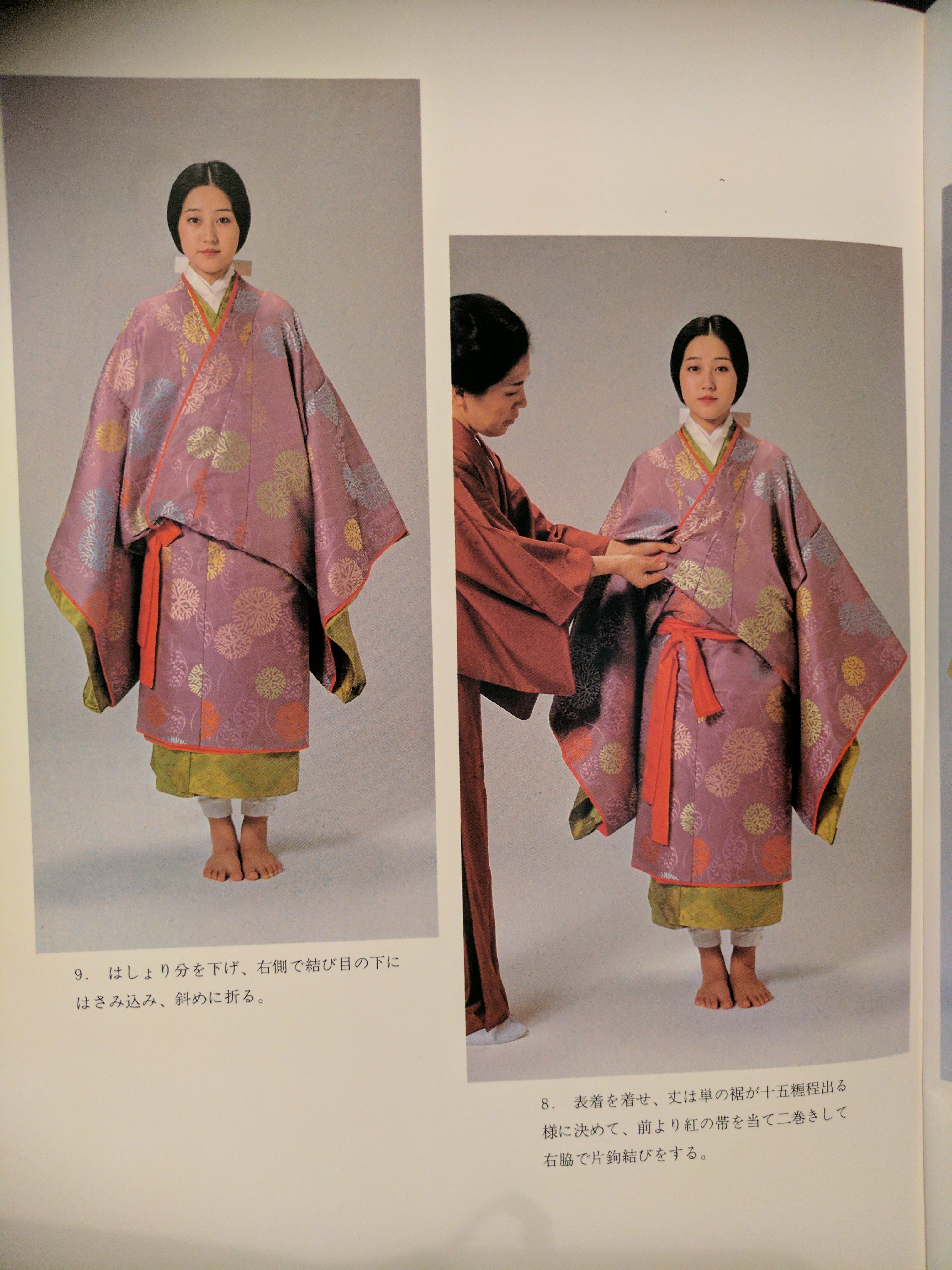
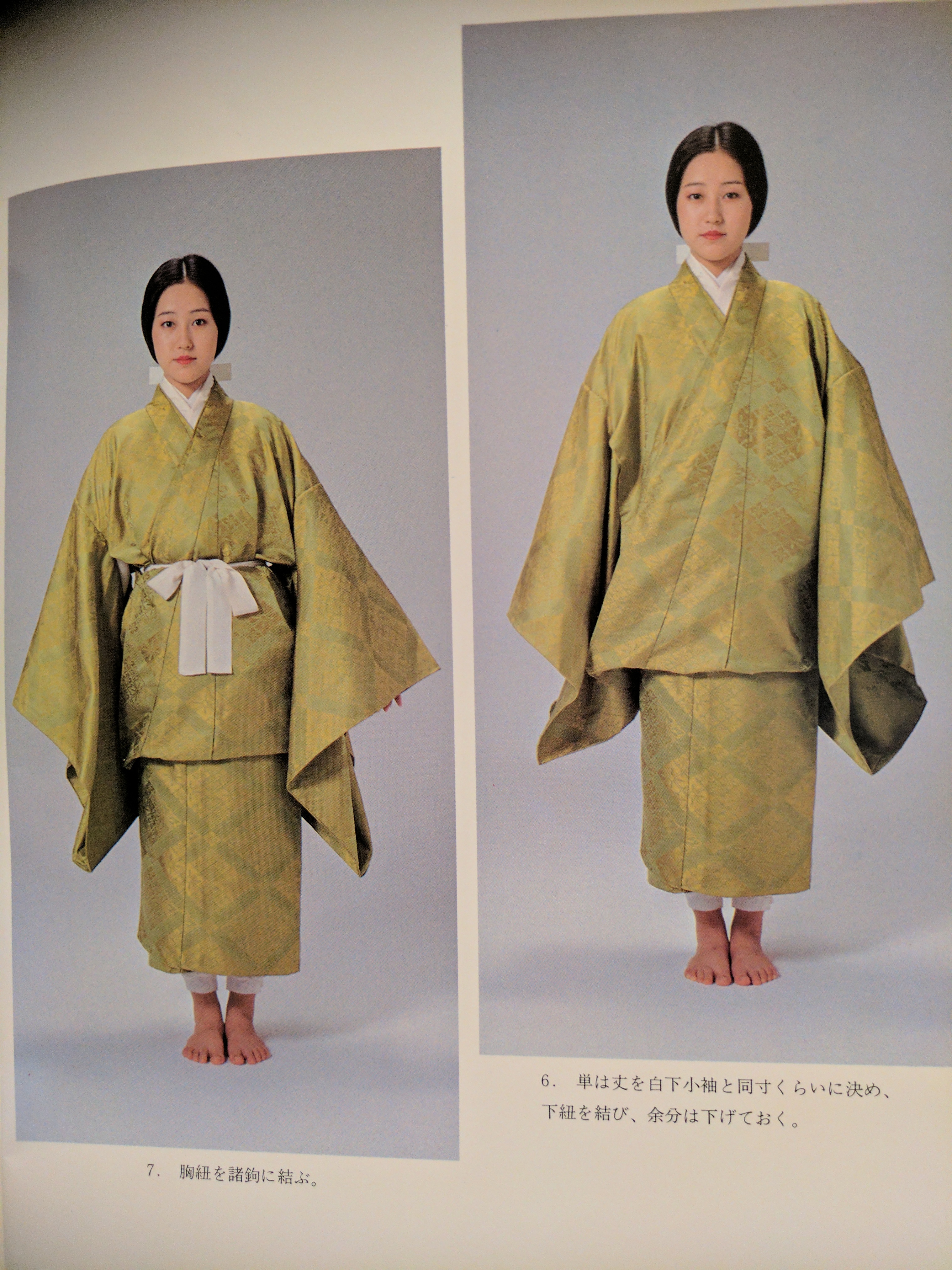
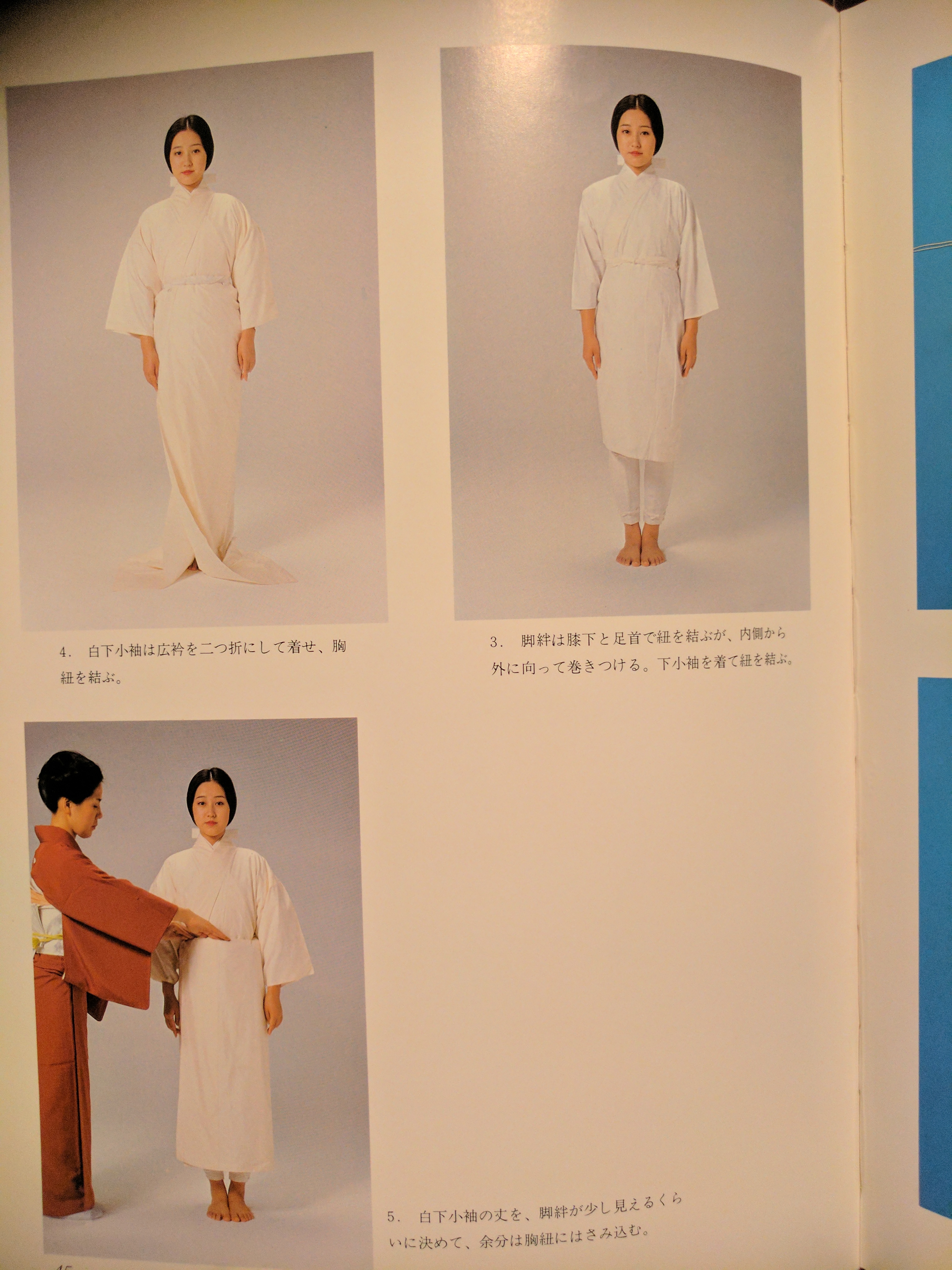
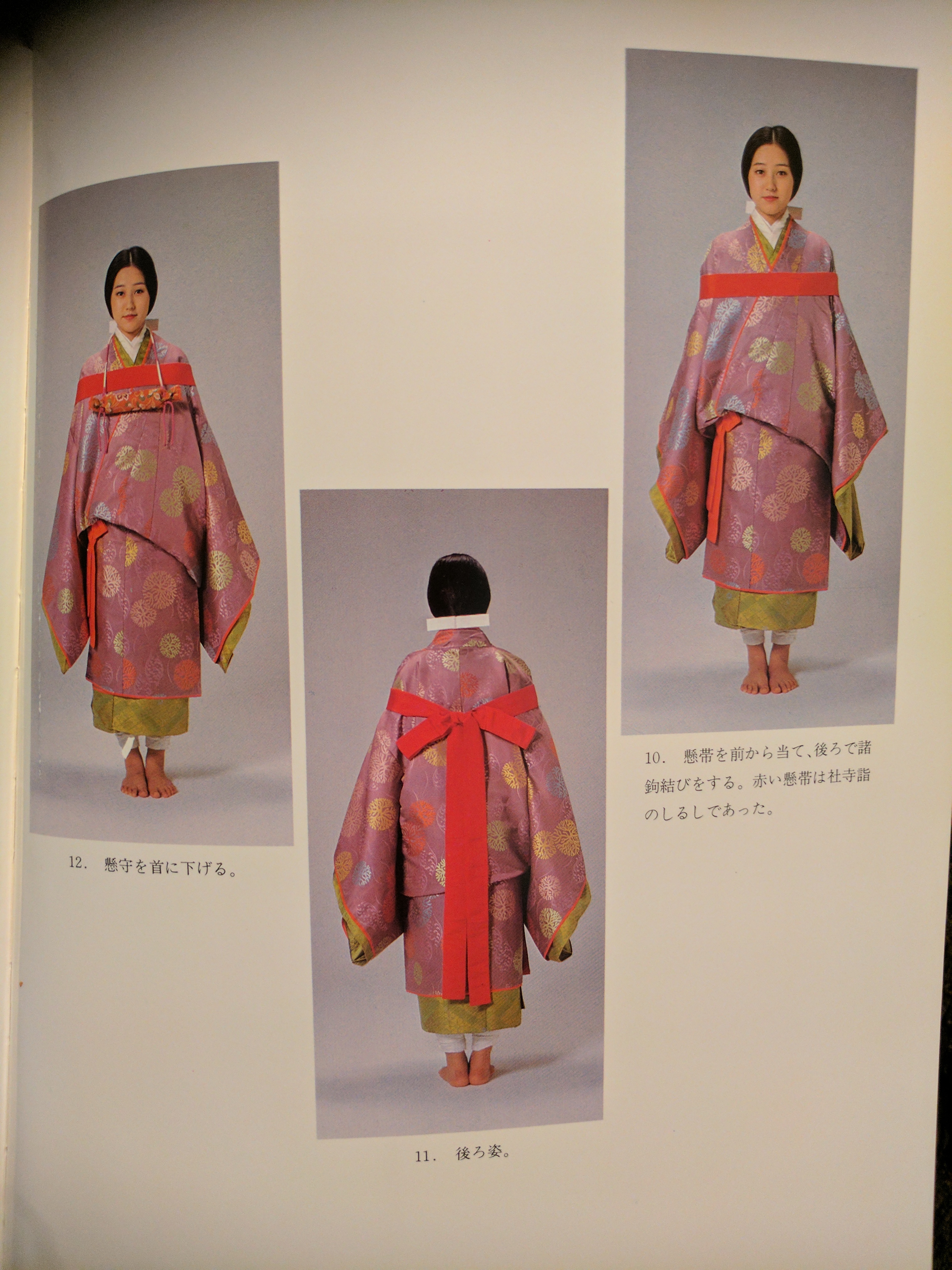
The dressing method used for Kamakura period attached sleeves (hōeki) is different from the one shown above. The hitoe and uchiki must be nested together and then put on as if they’re a single garment, crossing the fronts simultaneously before securing with the obi.
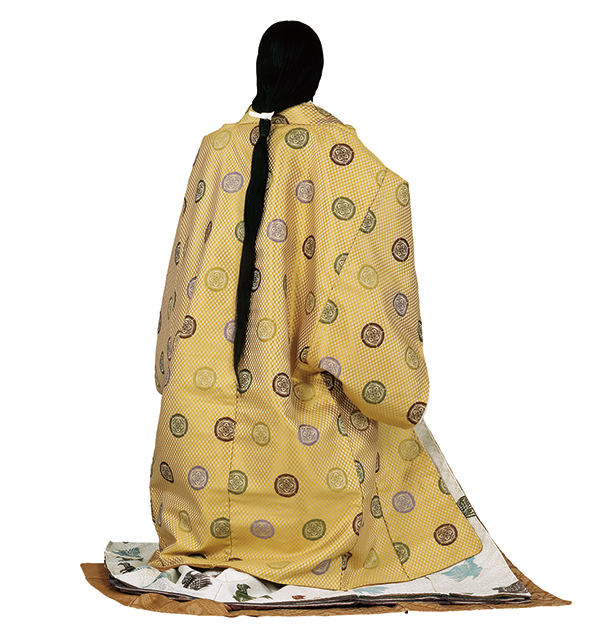
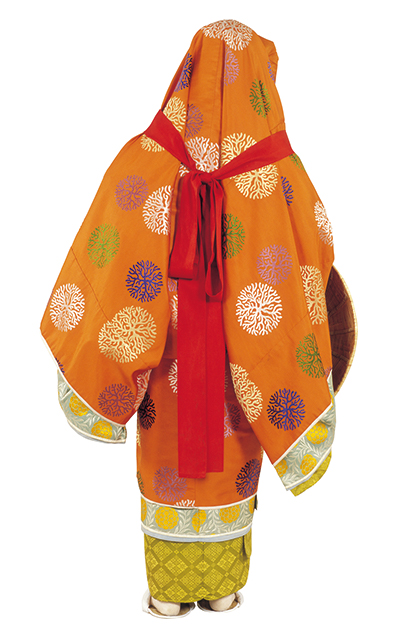
The definitions abbreviated KCM below are my own translation of the Japanese glossary entries from the Kyōto Costume Museum website. Patterns and fabric types are from Jidai Ishō no Nuikata. These example fabrics are not the only types of fabric that could be used; for example, a summer version of an upper class garment might be made from silk gauze (sha/紗), and a commoner variant could be made from hemp or ramie.
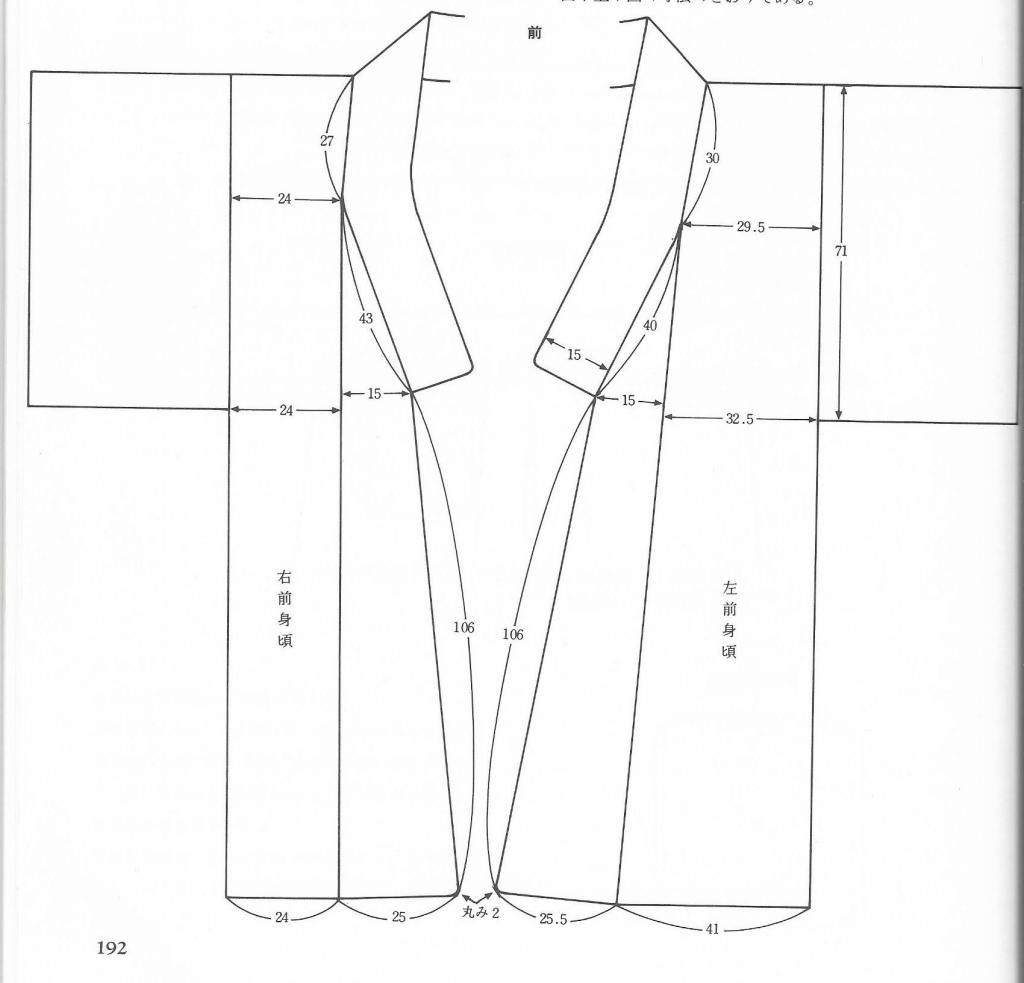
| Overall garment height, shoulder to hem (cm) | Overall garment width, wrist to wrist (cm) | Sleeve length, top to bottom (cm) | |
| hitoe | Heian: 182 Kamakura: 174 | Heian: 149 Kamakura: 164 | Heian: 74 Kamakura: 71 |
| uchiki/itsutsuginu | Heian: 188 Kamakura: 165 | Heian: 150 Kamakura: 174 | Heian: 74 Kamakura: 72 |
| uwagi | Heian: 182 Kamakura: 174 | Heian: 150 Kamakura: 169 | Heian: 69* Kamakura: 71 |
I would recommend resizing the patterns according to how far down you want them to fall. For example, a noblewoman’s jūnihitoe should partially conceal her hands, so you might put on a bathrobe and estimate that each sleeve would need to be four inches longer to do that, and so your wrist-to-wrist measurement would be the bathrobe’s plus eight inches. The sleeve lengths of the layers do not need to be successively shorter in order for all of them to be visible – the bulk of layering will accomplish that.
The Heian layers are designed to trail behind, so you might make the overall garment height your height plus six inches. The Kamakura versions are shorter; if you make them long enough to hit the floor when worn loose, they’ll brush the top of your foot when belted. If you’re not sure, err on the side of making it longer – you can easily shorten it later.
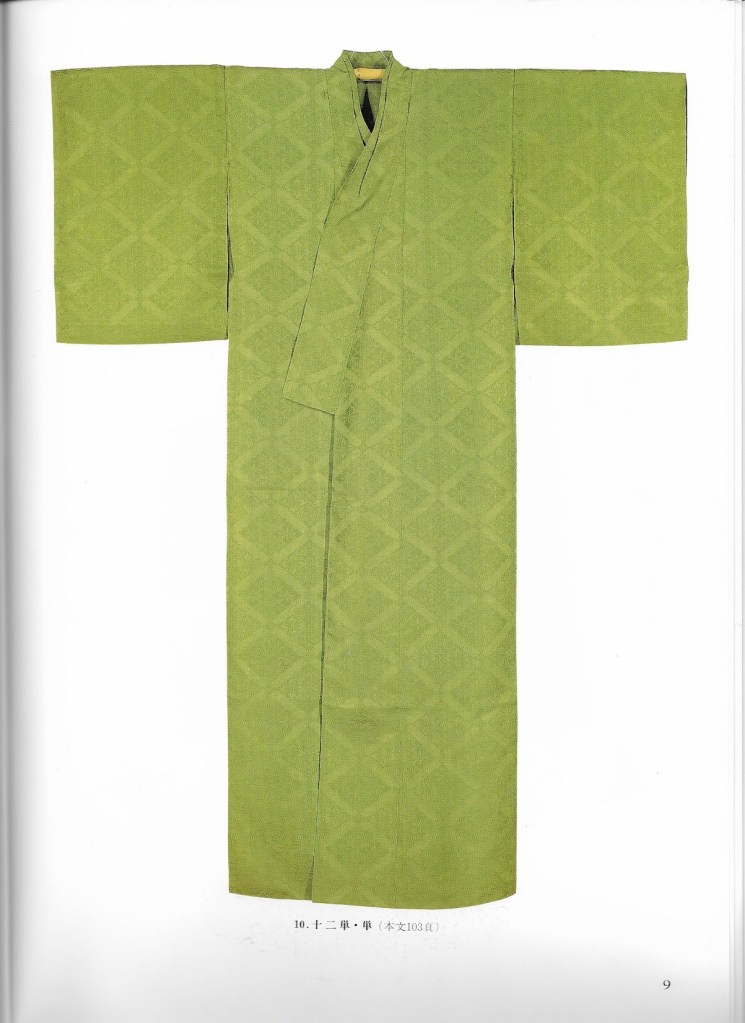
Hitoe (単)
KCM: “Unlined inner garment used for male and female ensembles. Also, a kosode-style garment with a single outer layer and no lining.”
Tsukime: The hitoe is the innermost and simplest of the long-sleeved (ōsode) layers. When the layers are worn trailing behind, it protects the upper layers from touching the floor. Hitoe literally means “unlined”, and unlined ōsode and kosode can both be called hitoe despite the differences in sleeve shape.
Heian period hitoe fabric:
- Yellow-green (moegi/萌葱) floral diamond-patterned (saiwaibishimon/幸菱文) two-color figured twill (kataji aya/固地綾)
Kamakura period hitoe fabric:
- White floral diamond-patterned (saiwaibishimon/幸菱文) single-color figured twill (ayaji aya/綾地綾)
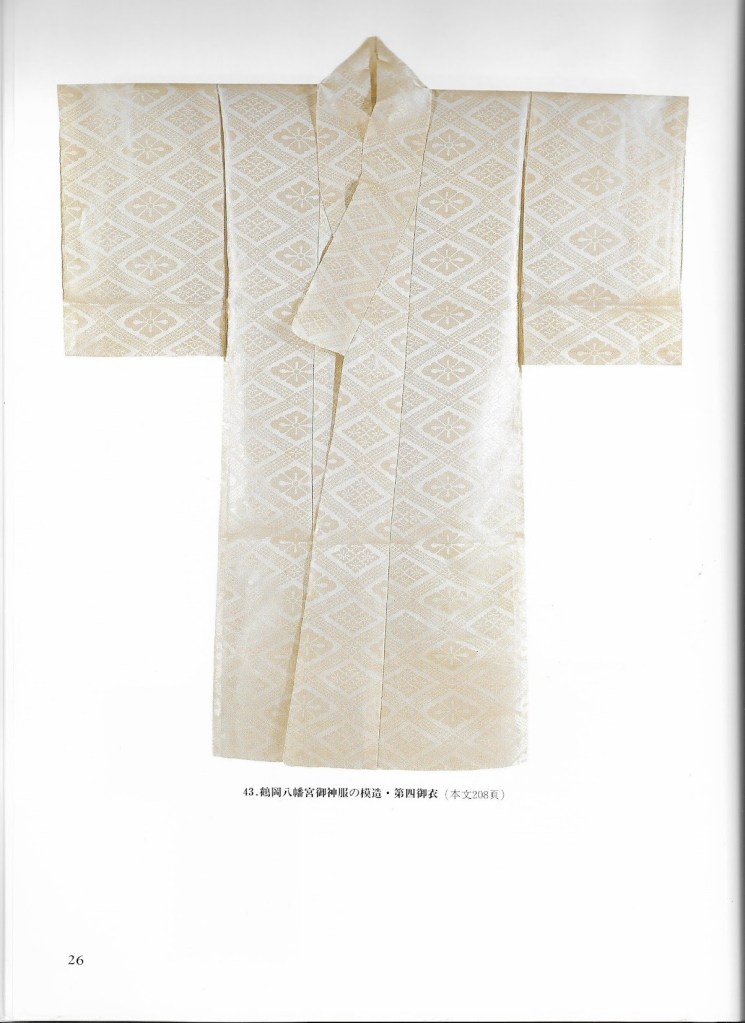
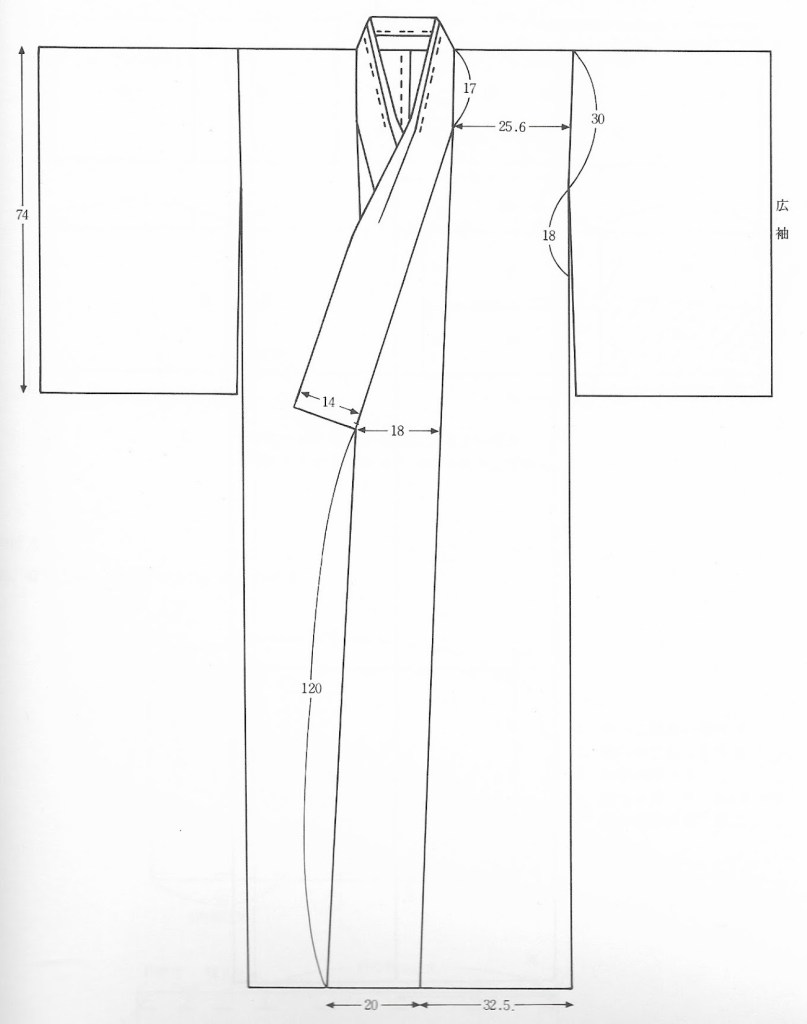
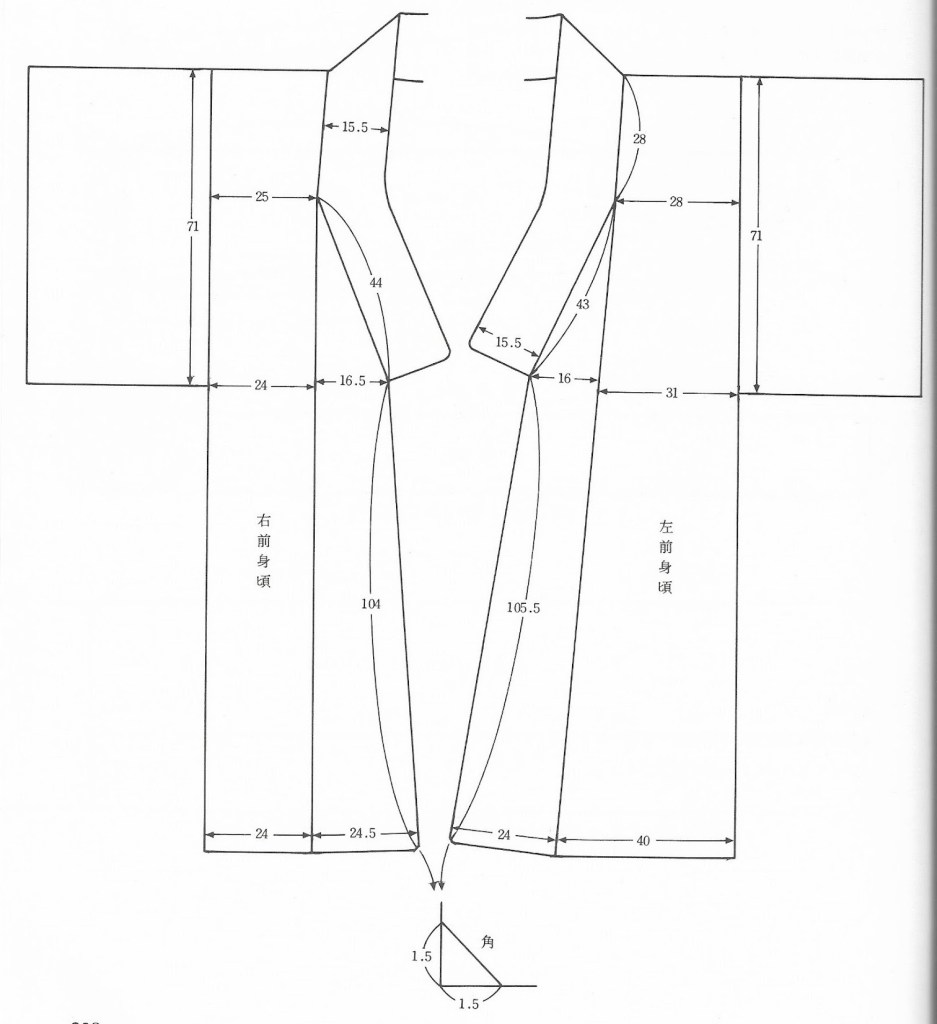
Uchiki (袿)
KCM: Noblewomen could use uchiki as an underlayer for a ko-uchigi or an uwagi. For everyday, uchiki were worn with just a hitoe. In addition, layering multiple uchiki is known as uchiki kasane.
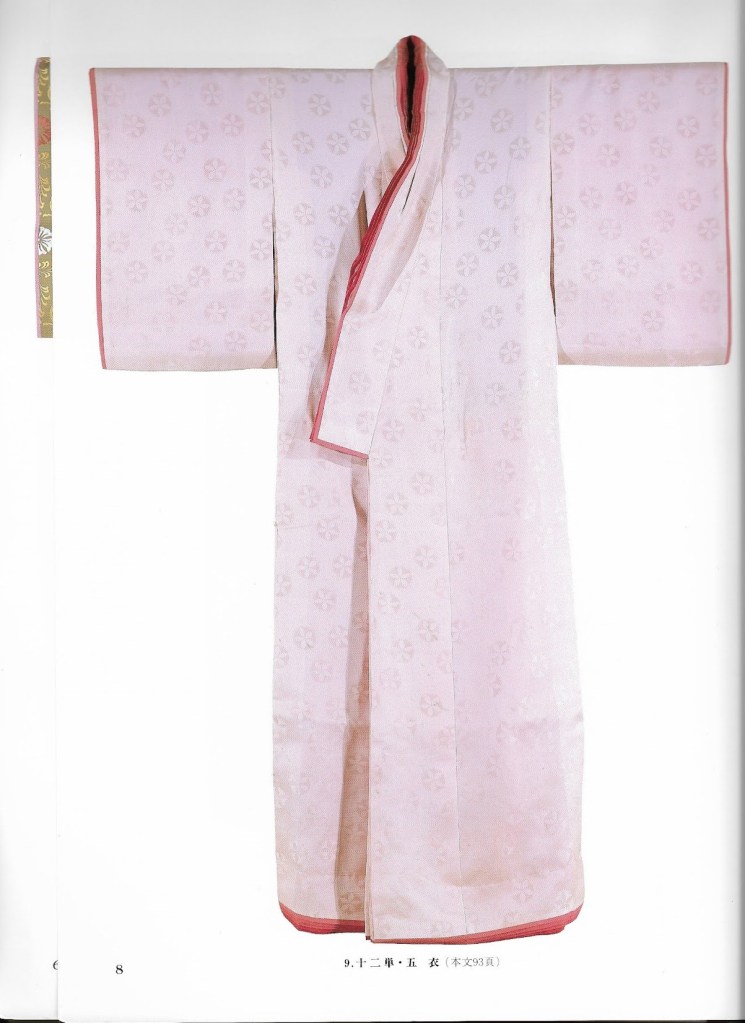
Tsukime: You will frequently see the two confused, but please note, an uchiki is not the same garment as an uchigi/uchiginu (打衣), which is a stiffening layer worn under the uwagi if present. Just to mess with you, though, it is the same thing as a kinu (衣). The itsutsuginu (五衣) is a single garment designed to look like five layered uchiki. The itsutsuginu pattern can easily be adapted to make a single uchiki.
Heian period itsutsuginu fabrics:
- Exterior: pink (usubeni/淡紅) plum blossom patterned (baikamon/梅花文) twill (aya/綾)
- Collar and lining: darkening shades of red (beni/紅) plain-weave silk (hiraginu/平絹)
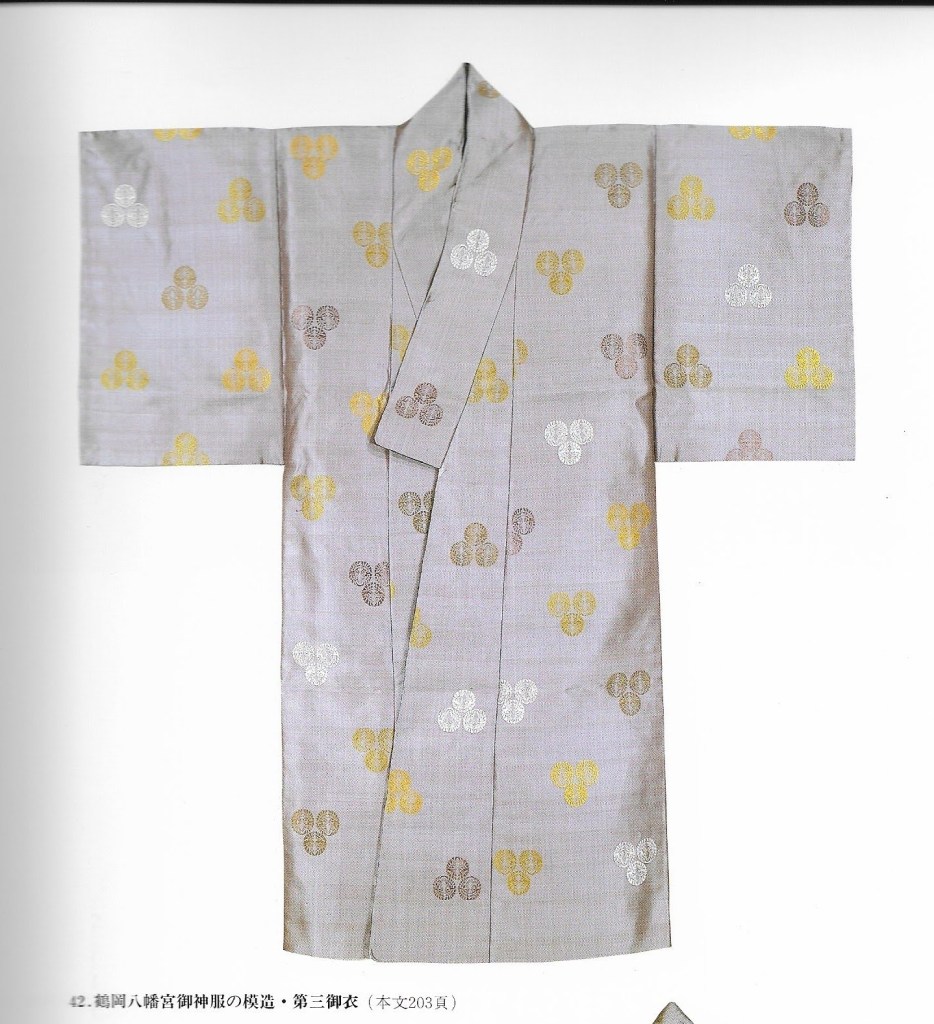
Kamakura period uchiki fabrics:
- Exterior: Triple circular crane patterns (tsuru no maru/鶴の丸) on a purple ground of floating-weft double-woven silk (uki-ori/浮織)
- Lining: White plain-weave silk (hiraginu/平絹)
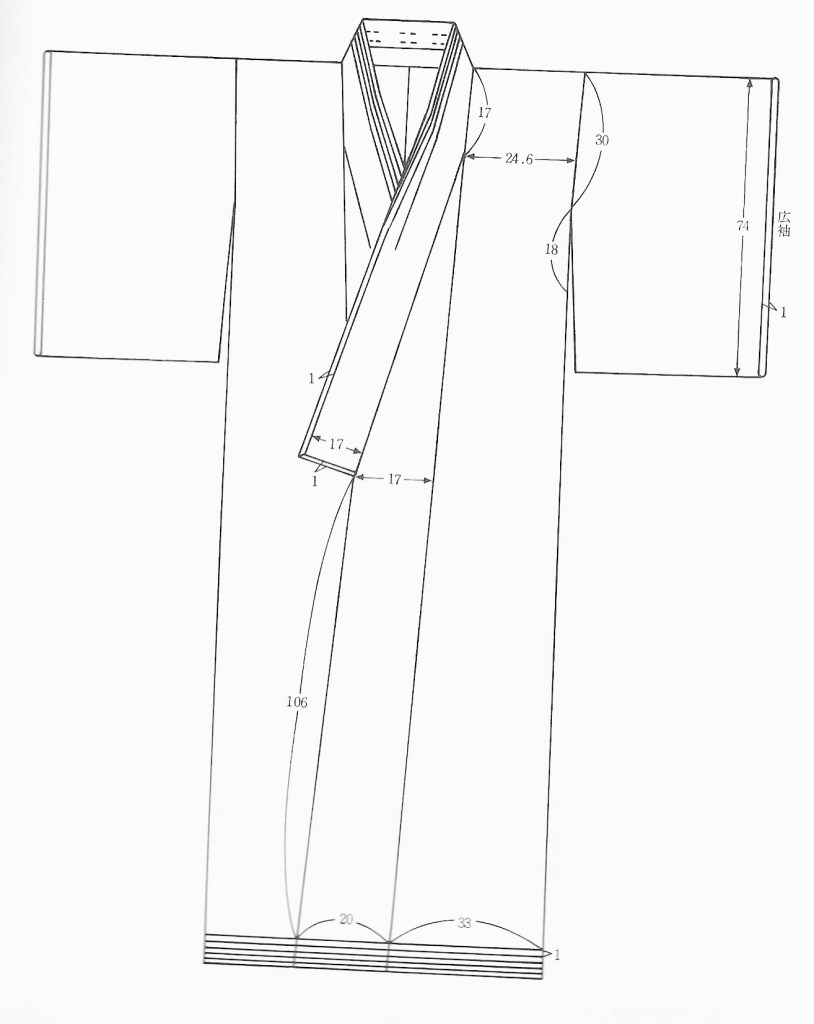
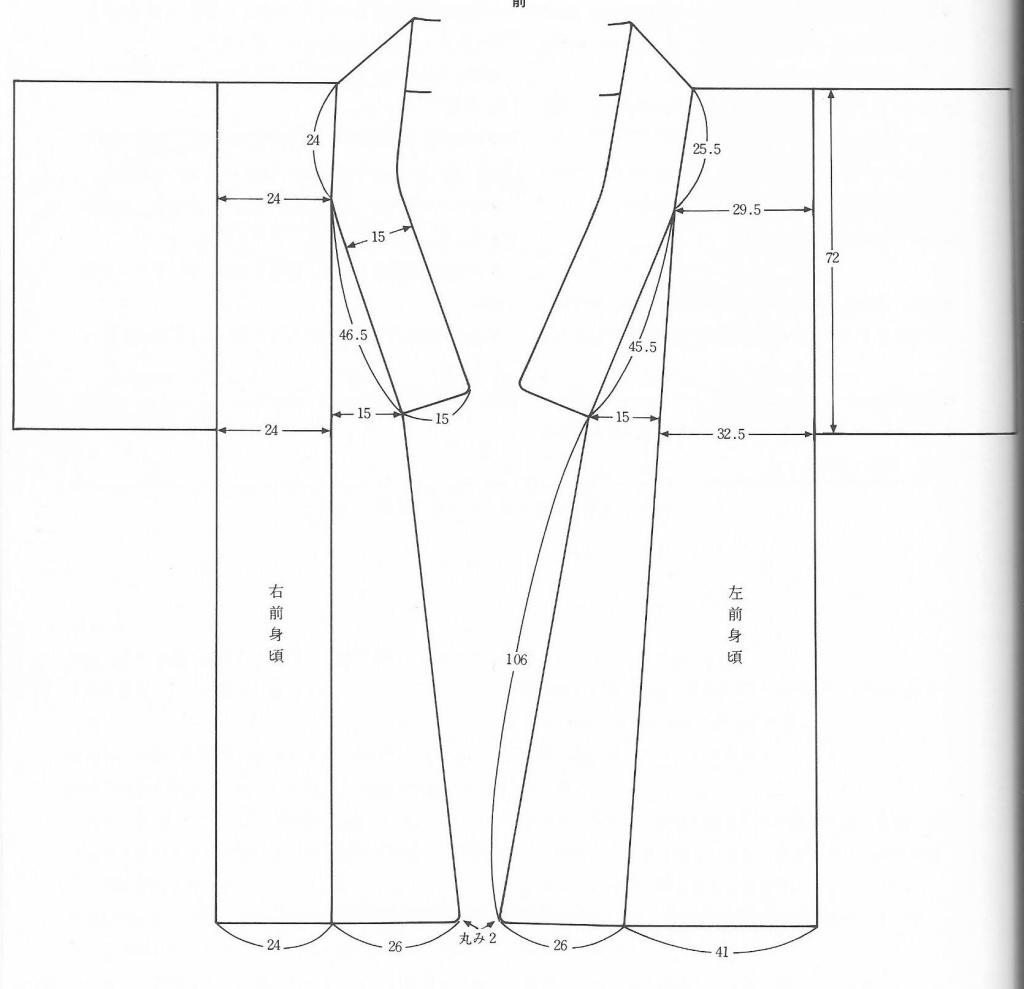
Uwagi (表着)
KCM: Generally considered to be the top layer of an ensemble. This is the second to outermost layer worn by a noblewoman when she dresses in karakoromo (full formal ensemble).
Tsukime: Particularly showy and expensive fabric was used for this outer layer, worn over the others only on formal occasions. The proportions and angles of the two differ as shown in the patterns below.
Heian period uwagi fabrics:
- Exterior: Yellow-green (moegi/萌葱) floral arabesque patterned (hana-karakusamon/花唐草文) Chinese-style brocaded silk (karaori/唐織)
- Lining: wisteria-lavender (fuji-iro/藤色) plain-weave silk (hiraginu/平絹)
Kamakura period uwagi fabrics:
- Exterior – (futae orimono/二陪織物) with a phoenix pattern on a white hollyhock background
- Middle layer – yellow plain-weave silk (hiraginu/平絹)
- Lining – Yellow-green (moegi/萌葱) silk with a twill pattern on a twill background (ayaji aya/綾地綾) with a pattern of facing butterflies shaped like diamonds (mukaichō hishimon/向い蝶菱文)
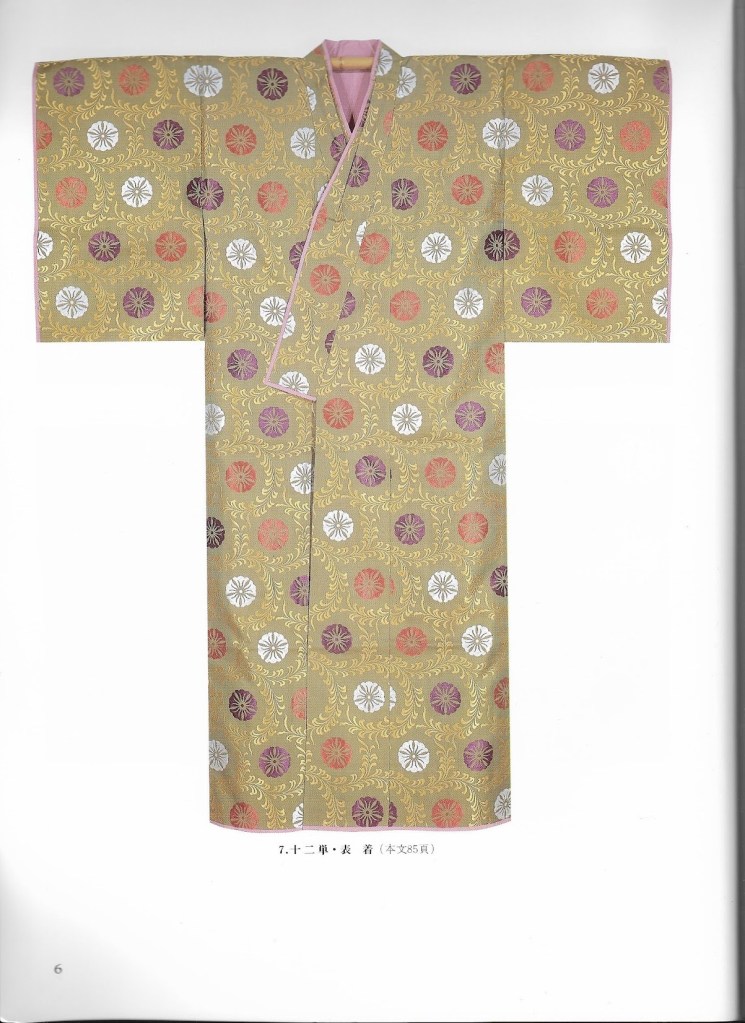

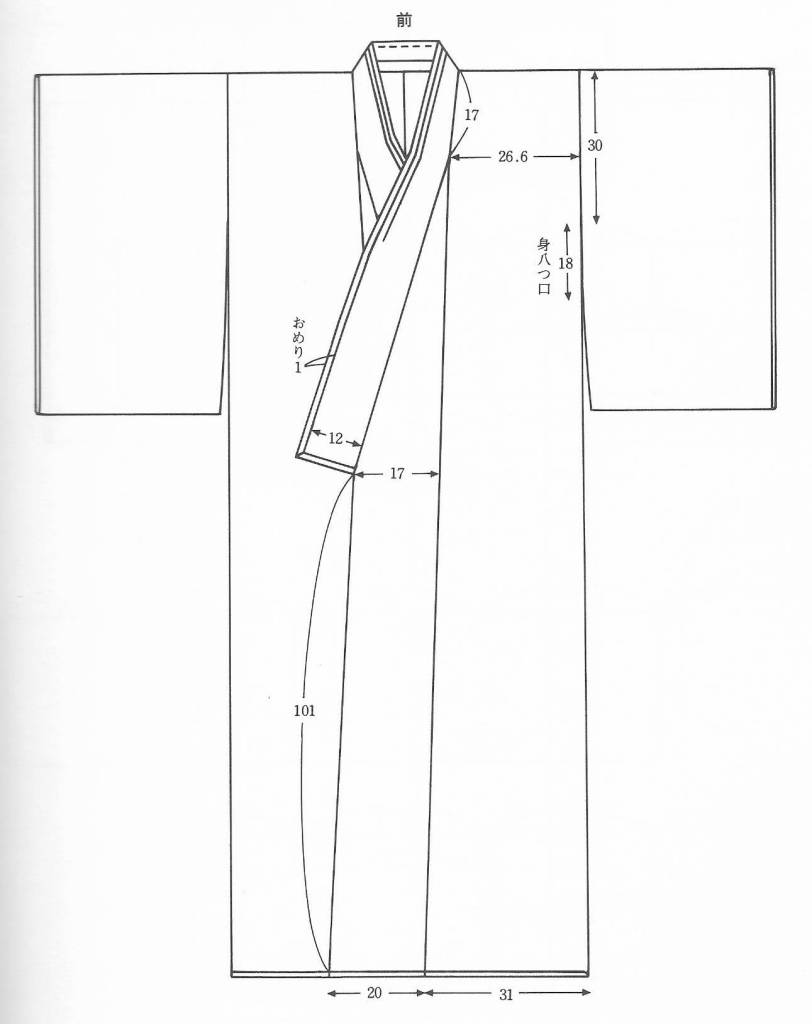
 旦暮庁 TANBO-CHŌ
Leave a comment